

What's behind it, what to watch for, and the simplest ways to get a reluctant dog hydrating again.
By the Brutus Broth Nutrition Team, last updated August 28th, 2026 4:00pm
TLDR
- Dogs refuse water for a range of reasons: a dirty or unappealing bowl, water that tastes off, anxiety, dental pain, or simply getting enough moisture from their food.
- A dog that goes more than 24 hours without any fluid intake warrants a vet call, especially in summer, for puppies, and for senior dogs.
- Adding bone broth to water or food is one of the fastest ways to get a reluctant dog to hydrate. The aroma is hard for even the pickiest dogs to ignore. (More on that: Is Your Dog Truly Hydrated?)
- Most water refusal is fixable with simple changes to the bowl, location, or water source.

Why does my dog refuse to drink water? The most common reasons are a dirty or unappealing bowl, water that smells or tastes off, anxiety in a new environment, or physical discomfort like dental pain. Less often, dogs who eat wet food or get bone broth daily simply need less water from the bowl because they're already getting enough moisture from their diet. This guide covers every scenario, with practical fixes for each.
Is It Normal for Dogs to Refuse Water?
Sometimes. A healthy dog typically drinks about 1 oz of water per pound of body weight per day. But dogs on wet food, raw diets, or receiving bone broth daily naturally drink less from the bowl because they're supplementing with dietary moisture. What isn't normal is a dog that goes 24+ hours without any fluid intake, especially during summer heat, after exercise, or alongside symptoms like lethargy, vomiting, sunken eyes, or dry gums. Those are signs of dehydration that need immediate attention.
Why Won't My Dog Drink from the Bowl?
This is more common than most owners realize, and the fix is often quite simple. Here are the most frequent culprits:
- The bowl itself: plastic bowls absorb odors over time and can make water smell off to a dog's sensitive nose. Stainless steel or ceramic bowls are better options, and should be washed daily, not just rinsed.
- Bowl location: dogs are uncomfortable drinking in high-traffic areas where they feel exposed, near loud appliances, or anywhere that feels unsafe. If the bowl is tucked in a corner next to the washing machine, that's likely the issue. Move it somewhere quiet and accessible.
- Ear interference: floppy-eared breeds like Cocker Spaniels, Basset Hounds, and Beagles often avoid deep bowls because their ears drag in the water. A wider, shallower bowl typically solves this immediately.
- Moving water preference: some dogs ignore standing water entirely but drink readily from a running source. A pet water fountain keeps water oxygenated, cooler, and more appealing to these dogs. Moving water also filters out particles that can affect taste.
- Chlorine and tap water taste: municipal tap water contains chlorine that many dogs can detect and dislike. Letting water sit in an open bowl for 30 minutes before serving allows chlorine to dissipate, or switch to filtered water.

Could a Health Issue Be Causing My Dog to Refuse Water?
Yes, and this is when water refusal becomes a signal worth taking seriously. Common medical causes include:
- Dental or mouth pain: lapping from a bowl hurts if a dog has a broken tooth, gum disease, or an oral ulcer. Watch for pawing at the mouth, excessive drooling, or reluctance to chew alongside water refusal.
- Nausea: A nauseated dog avoids the water bowl the same way a nauseated person avoids food. This typically accompanies vomiting, lethargy, or appetite loss. If your dog is nauseated, small amounts of bone broth (which is easier to keep down than plain water) can help maintain hydration while you contact your vet.
- Kidney disease: Counterintuitively, dogs with early kidney disease may drink less before eventually drinking more. If your dog's drinking habits have shifted noticeably in either direction (more or less), mention it to your vet at the next visit.
- Medications: Some medications reduce thirst as a side effect. If water refusal started around the same time as a new prescription, ask your vet whether it's expected and how to compensate.
- Anxiety or new environment: dogs in a new home, post-boarding, or after a vet visit often refuse water for several hours. This is behavioral rather than medical and usually resolves on its own within 24 hours. Keeping the bowl in a familiar, consistent location helps dogs re-establish normal drinking habits faster.
Does My Dog's Diet Affect How Much Water They Need?
Significantly. Dry kibble contains roughly 10% moisture, whereas wet food contains 70–80% moisture. A dog on an all-kibble diet needs substantially more water from the bowl. A dog eating wet food or receiving bone broth daily is already getting a meaningful portion of their daily fluid intake from food.
Bone broth is approximately 90% water, but dogs consume it readily when they'd ignore a plain bowl or water. That's because the amino acids, particularly glycine, create an aroma that triggers appetite and drinking even in reluctant dogs. For dogs on a dry kibble diet who aren't drinking enough, bone broth is one of the most effective ways to get them to drink that’s available. It solves the hydration gap and adds electrolytes, collagen, and glucosamine (if using Brutus Bone Broth) in the same pour.

How Do I Get My Dog to Drink More Water?
Start with the easiest fixes and work up from there:
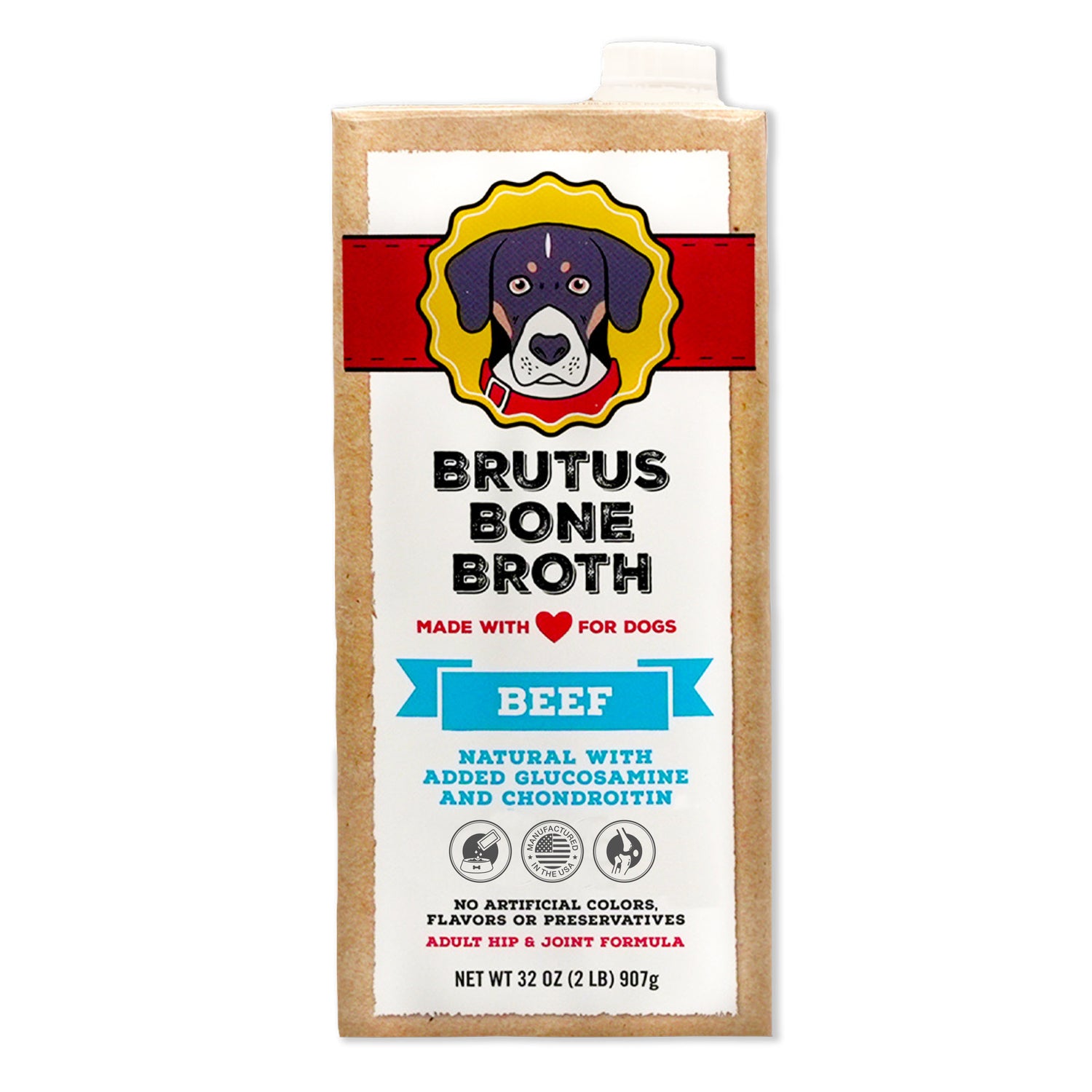
- Add bone broth to their bowl or food: a splash of Brutus Broth over water or kibble is the single most reliable way to get a dog to hydrate who otherwise won't. It works on dogs fresh out of surgery, anxious dogs in new environments, and picky eaters who ignore plain water.
- Switch the bowl: go stainless steel or ceramic, wash it every day, and try a wider, shallower shape if your dog has long ears.
Change the location: quiet, accessible, away from high-traffic or anxiety-inducing areas. Multiple water stations in a larger home also help. Just like humans, dogs drink more when water is where they already spend time. - Try a water fountain: Running water is higher in oxygen and more appealing to many dogs. Fountain models with carbon filters also remove the chlorine taste that can put dogs off tap water.
- Add moisture to meals: wet food, canned pumpkin, plain Greek yogurt, or a bone broth pour-over all add meaningful fluid to meals without requiring the dog to drink voluntarily. This is especially useful for dogs who are sick, recovering, or going through a summer heat stretch.
- Monitor and escalate if needed: if simple changes don't work and your dog has gone 24 hours without fluid intake, call your vet. Dehydration moves quickly in dogs, especially in heat, puppies, and senior dogs.
Frequently Asked Questions
Why does my dog refuse to drink water? The most common reasons are a dirty or unappealing bowl, water that tastes or smells off (often from chlorine or a plastic bowl), dental pain, nausea, stress in a new environment, or not getting enough moisture from wet food or bone broth. Start by swapping the bowl, moving its location, and trying filtered water. If refusal persists past 24 hours or comes with other symptoms, contact your vet.
Why won't my dog drink water from the bowl? Bowl-specific refusal usually points to one of three things: the material (plastic retains odors), the depth (deep bowls interfere with floppy ears), or the location (too noisy or too exposed). Try a stainless steel bowl, washed daily, in a quieter spot. A pet water fountain is worth trying if your dog is drawn to running water.
How much water should a dog drink per day? A general guideline is 1 oz of water per pound of body weight per day. A 50 lb dog should consume roughly 50 oz, but this includes moisture from food, not just the bowl. Dogs on wet food or receiving bone broth daily need noticeably less plain water than dogs on all-dry kibble diets.
What can I add to my dog's water to make them drink? Bone broth is the most effective option. The aroma from naturally occurring amino acids triggers drinking in dogs who've been ignoring the bowl for hours. Use a low-sodium, onion-free broth like Brutus Broth that's formulated for dogs.
Is bone broth good for dogs who won't drink water? Yes, bone broth is one of the best tools for dogs who refuse water because dogs accept it readily even when they've been ignoring their bowl. Bone broth is approximately 90% water, so it delivers real hydration alongside electrolytes, amino acids, collagen, and glucosamine. It's safe for daily use and is particularly useful during recovery, summer heat, travel, and for senior dogs with reduced thirst drive.
Can dogs have bone broth instead of water? Dogs can have bone broth daily, but it shouldn't fully replace access to fresh water. Most dogs will naturally drink less plain water when bone broth is in the mix, which is fine, since they're getting hydration from the broth. Keep a clean water bowl available at all times and use bone broth as an addition rather than a replacement.
Is it okay if my dog doesn't drink water all day? It depends on what else they're consuming. If a dog is eating wet food or bone broth and getting dietary moisture, a day with minimal bowl drinking may be fine. If a dog is on dry kibble, refusing water entirely for 24+ hours (especially in summer or after exercise) is a concern. Watch for dehydration signs: dry or tacky gums, sunken eyes, lethargy, or skin that doesn't spring back when gently pinched at the scruff.
When should I take my dog to the vet for not drinking? Call your vet if your dog has had no fluid intake (food or water) for 24 hours, or sooner if water refusal is accompanied by vomiting, diarrhea, lethargy, dry gums, sunken eyes, or any sign of pain. Puppies and senior dogs dehydrate faster than healthy adults, so don't wait the full 24 hours for those groups.
The Bottom Line
Most dogs who refuse water have a fixable reason behind it. The bowl or diet are the first two things to troubleshot with first. Material, depth, cleanliness, and location of your dog’s water bowl will likely solve the majority of cases. If the bowl isn't the issue, take a closer look at your dog’s diet. A dog getting bone broth or wet food regularly may simply not need as much from the bowl. If water refusal comes with other symptoms, don't troubleshoot; call your vet.
For dogs who need a hydration boost, bone broth is great for dogs in a way plain water never can be: it hydrates, it nourishes, and it's irresistible even to the pickiest drinkers. Browse Brutus Broth's full product line here, or explore our other hydration resources:
→ Is Your Dog Truly Hydrated? Why Water Alone Isn't Enough
→ What Should I Make My Dog This Summer? 10 Homemade Treats and Drinks from Brutus Broth